
On-Page vs Off-Page SEO: Key Differences Explained Clearly

In the digital age, visibility on search engines determines the success or failure of a website. Every day, millions of users search online for information, products, and services. However, only a small percentage of websites appear on the first page of search engine results. This visibility is achieved through Search Engine Optimization (SEO).
SEO is not a single action or technique. It is a combination of strategies designed to improve how search engines understand, evaluate, and rank a website. Among all SEO strategies, two pillars form the foundation of search optimization: On-Page SEO and Off-Page SEO.
Many people misunderstand SEO and assume that writing content alone or building backlinks alone is enough. In reality, SEO works effectively only when both On-Page and Off-Page SEO are implemented correctly and consistently.
What Is On-Page SEO?
On-Page SEO refers to all the optimization activities that are performed within a website to improve its ranking in search engine results pages (SERPs). It focuses on optimizing individual web pages so that search engines can clearly understand the content and users can easily find value in it.
In simple terms, On-Page SEO is about optimizing what users see and experience on your website, as well as what search engines read when they crawl your pages.
Search engines analyze several factors on a webpage, such as:
- Content quality and relevance
- Keyword placement
- Page structure
- Website usability
- Technical elements
On-Page SEO helps answer a critical question for search engines:
“Does this page clearly and accurately satisfy the user’s search intent?”One of the biggest advantages of On-Page SEO is that it is completely under your control. You decide what content to publish, how to structure it, and how to optimize it for both users and search engines
Key Elements of On-Page SEO
On-Page SEO consists of several essential elements that work together to improve rankings, user engagement, and website performance.
High-Quality Content
Content is the foundation of On-Page SEO. Search engines prioritize content that is informative, original, accurate, and useful. High-quality content:
- Answers user questions clearly
- Provides real value
- Is written in simple and understandable language
Content that helps users naturally earns better rankings over time.
Keyword Research and Optimization
Keywords are the words and phrases users type into search engines. Proper keyword research helps identify what users are searching for. On-Page SEO involves using these keywords naturally in:
- Page titles
- Headings
- Body content
- URLs
- Image alt text
Keyword usage should always feel natural and not forced.
Title Tags and Meta Descriptions
Title tags define the title of a webpage in search results. Meta descriptions summarize the page content. Together, they:
- Improve click-through rates
- Communicate relevance
- Help users decide whether to click
Heading Structure (H1, H2, H3)
Headings organize content into sections and sub-sections. Proper heading structure:
- Improves readability
- Helps search engines understand content hierarchy
- Makes long blogs easier to navigate
URL Optimization
SEO-friendly URLs are short, descriptive, and keyword-focused. Clean URLs improve trust and usability.
Internal Linking
Internal links connect pages within the same website. They help:
- Improve navigation
- Spread page authority
- Increase time spent on the site
Image Optimization
Images should be optimized by:
- Compressing file size
- Using descriptive filenames
- Adding alt text
This improves page speed and accessibility.
Page Speed and Performance
Fast-loading pages provide a better user experience. Page speed is a confirmed ranking factor.
Mobile Friendliness
With mobile-first indexing, websites must work well on mobile devices. Responsive design ensures content displays correctly on all screen sizes.
User Experience (UX)
UX includes navigation, layout, readability, and interaction. A good user experience keeps visitors engaged and reduces bounce rates.
What Is Off-Page SEO?
Off-Page SEO refers to all optimization activities performed outside your website to improve its authority, credibility, and trustworthiness.
Unlike On-Page SEO, Off-Page SEO focuses on how other websites, platforms, and users perceive your website. Search engines use Off-Page signals to measure popularity and reliability.
Off-Page SEO helps answer this question:
“How trustworthy and authoritative is this website compared to others?”
You do not fully control Off-Page SEO, but you can influence it through ethical strategies and quality content.
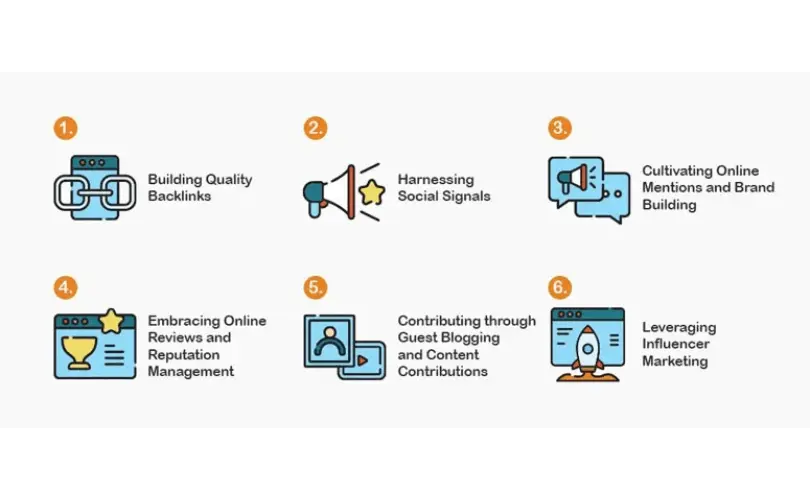
Key Elements of Off-Page SEO
Off-Page SEO includes multiple external factors that strengthen a website’s reputation.
Backlinks
Backlinks are links from other websites pointing to your site. They act as votes of confidence.
Quality backlinks:
- Come from authoritative websites
- Are relevant to your niche
- Are earned naturally
Domain Authority
Domain authority reflects a website’s overall credibility. Strong authority improves ranking potential.
Social Media Signals
Social media helps distribute content, increase visibility, and attract traffic, indirectly supporting SEO.
Brand Mentions
Mentions of your brand name across the web build trust, even without direct links.
Guest Blogging
Publishing content on other websites builds backlinks and industry recognition.
Influencer Outreach
Influencers help amplify content reach and encourage natural link acquisition.
Online Reviews and Reputation
Positive reviews increase trust and credibility, especially for local businesses.
Community Participation
Engaging in forums and Q&A platforms builds authority and referral traffic.
On-Page vs Off-Page SEO: Key Differences
Although both aim to improve rankings, On-Page and Off-Page SEO differ significantly.
|
Factor |
On-Page SEO |
Off-Page SEO |
|
Location |
Inside the website |
Outside the website |
|
Control |
Fully controllable |
Partially controllable |
|
Focus |
Content & structure |
Authority & trust |
|
Speed |
Faster impact |
Long-term impact |
|
Risk |
Low |
High if unethical |
On-Page SEO builds the foundation, while Off-Page SEO strengthens authority.
Why On-Page and Off-Page SEO Must Work Together
On-Page SEO and Off-Page SEO are not competitors—they are complementary strategies.
A website with great content but no backlinks may struggle to rank. A website with many backlinks but poor content will fail to retain users.
Together, they:
- Improve relevance and trust
- Strengthen rankings
- Create sustainable growth
- Balanced SEO produces consistent results.
Impact on Search Engine Rankings
When both strategies work together:
- Pages are indexed correctly
- Engagement metrics improve
- Authority grows naturally
- Rankings become stable
Search engines reward websites that combine quality content with strong credibility.
Which Is More Important: On-Page or Off-Page SEO?
There is no single winner.
- New websites should prioritize On-Page SEO
- Competitive industries require strong Off-Page SEO
- Long-term success depends on both
The most effective SEO strategy starts with strong On-Page optimization and expands through Off-Page authority building.
Final Conclusion
Understanding On-Page vs Off-Page SEO is essential for anyone who wants long-term success in digital marketing. On-Page SEO ensures your website is optimized, relevant, and user-friendly. Off-Page SEO builds trust, authority, and credibility beyond your website.
When both strategies are implemented together with consistency and quality, they create a powerful SEO foundation that drives organic traffic, improves rankings, and supports sustainable online growth.
Blog by
SAHANA H S